












Quick answer: Birds, reptiles, ferrets, amphibians and fish need a vet who sees them regularly, because their anatomy, diseases and husbandry needs are nothing like a cat’s or a dog’s. At Noah’s Ark in Medowie we see these species every week. An annual health check with a husbandry review is the foundation, and because exotic pets hide illness even better than cats, any change in eating, breathing, posture or behaviour is a reason to call sooner.
If you’ve ever rung a vet clinic about a sick budgie or a bearded dragon that’s gone off its food and been told “we don’t really do those,” you’ll know how isolating owning an exotic pet can be. Pet shops sell them freely, online advice contradicts itself, and many clinics simply don’t have the interest or experience. We do. Here’s what expert care for birds and exotic pets actually looks like, what we see most often, and how to tell when your unusual pet needs help.
Why exotic pets need a vet with specific experience
A dog vet can’t just scale down. A budgie’s heart rate sits in the hundreds, its bones are hollow and its respiratory system runs through air sacs. A python can’t be given most of the drugs used in mammals at the same doses. A ferret’s adrenal glands cause problems no dog ever has. And for reptiles and amphibians, the majority of illness isn’t infectious at all; it’s the result of temperature, lighting, humidity or diet being slightly wrong for a long time.
This is why a good exotic pet consult starts with the setup, not the symptom. We’ll ask about enclosure size, heat sources, UV lighting, substrate, water quality, diet and routine before we ever pick up a stethoscope, because that’s where the answer usually is.
The species we see at Noah’s Ark
Birds
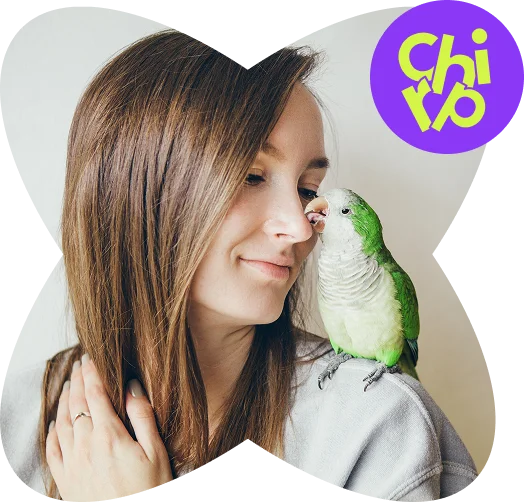
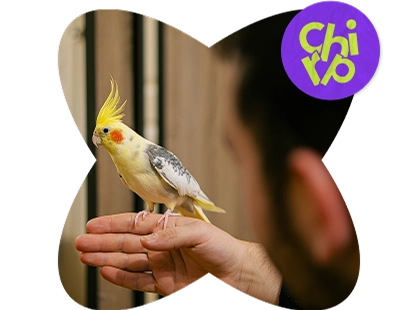
Budgies, cockatiels, lovebirds, parrots, finches, canaries and the occasional chook. Common issues include nutritional problems from all-seed diets, feather plucking, respiratory infections, egg binding in hens, and overgrown beaks and nails. We recommend an annual check as a minimum, twice-yearly for older birds, and a shift to a pelleted diet with fresh vegetables for most parrot species.
Reptiles
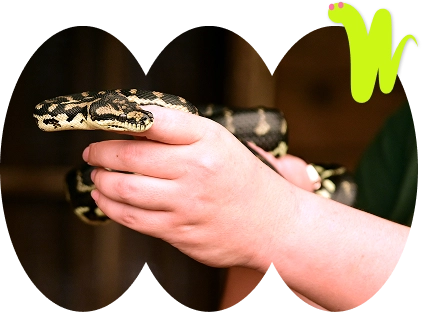
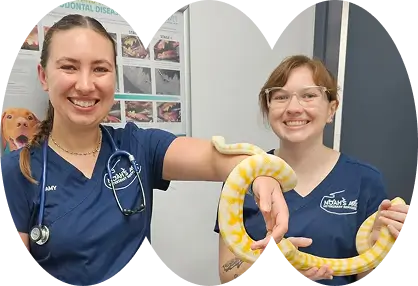
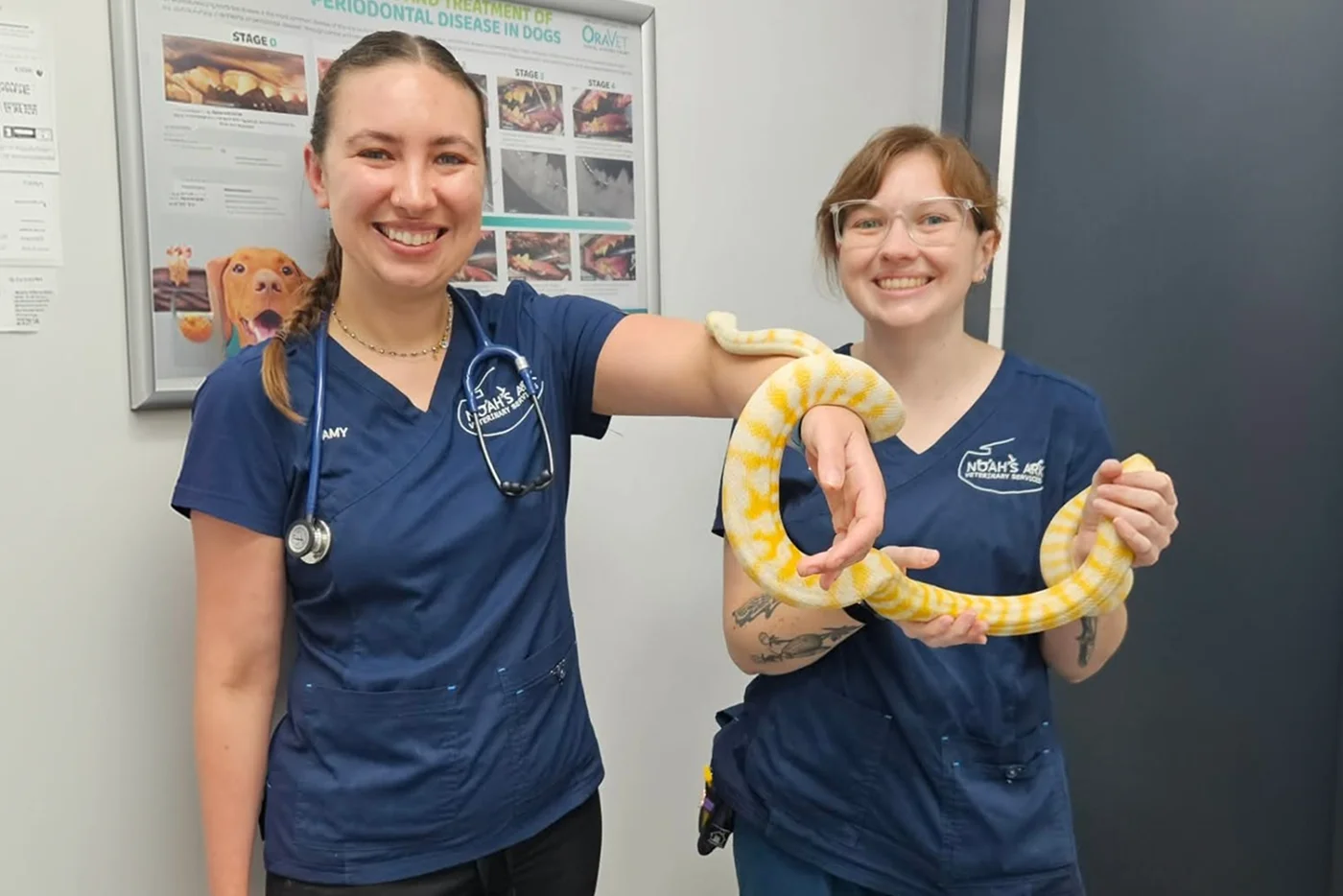
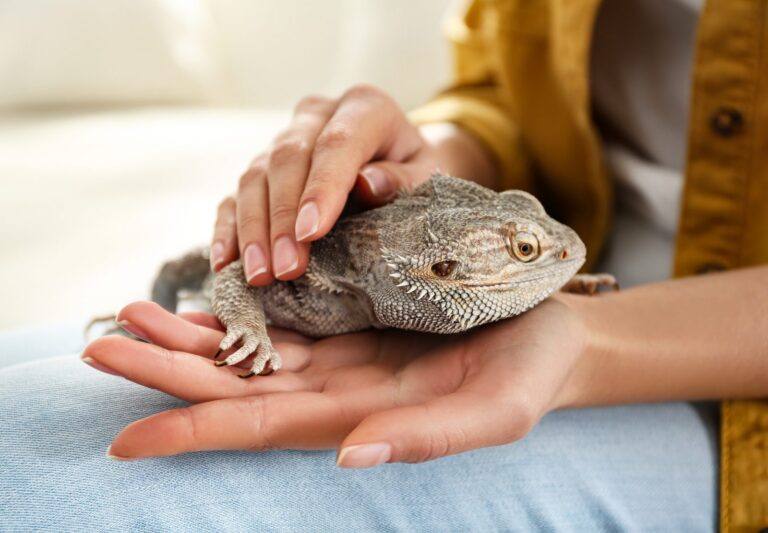
Bearded dragons, blue-tongue lizards, pythons, turtles and geckos. The big three problems are metabolic bone disease from inadequate UV or calcium, respiratory infections from enclosures running too cold, and parasites. Reptiles don’t need vaccinations, but every visit includes a husbandry review. Remember that native reptiles require a NSW native animal keeper licence. Our article on caring for pet snakes goes into the detail for snake owners.
Ferrets
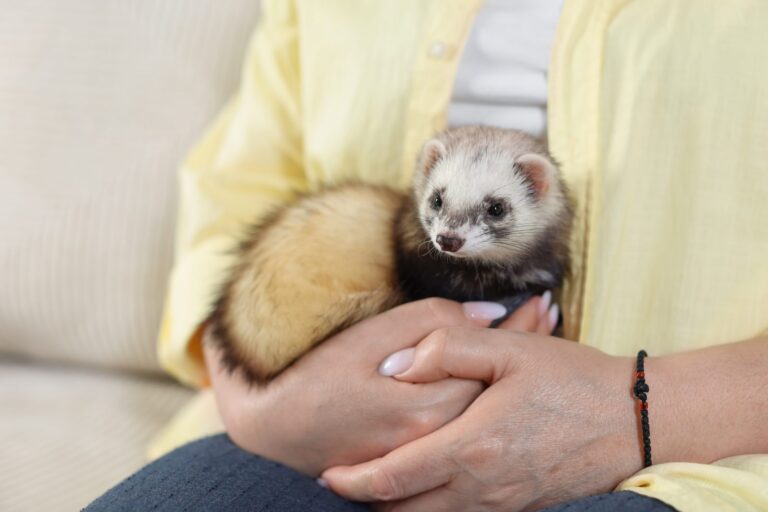
Brilliant, chaotic, and prone to a few specific conditions: adrenal disease, insulinoma (low blood sugar from a pancreatic tumour) and swallowed foreign objects. We recommend annual checks, moving to six-monthly from about age four, and a high-protein, meat-based diet.
Amphibians and fish
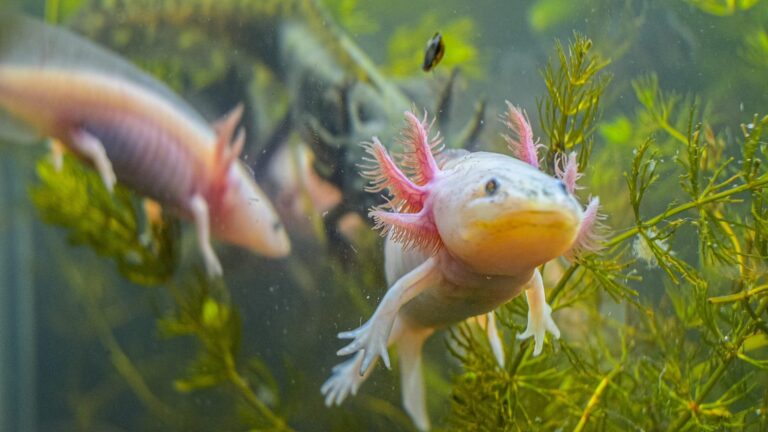
Axolotls, frogs, bettas, goldfish and tropical community tanks. Almost every problem in these animals comes back to water quality, so a consult often starts with your test results for ammonia, nitrite, nitrate, pH and temperature. Bring them if you have them.
Pocket pets
Rabbits, guinea pigs, rats and mice are also very welcome. Rabbits in particular need calicivirus vaccination, which is widespread in Australia and often fatal within a day or two. See our pocket pets page for more.
What to expect at an exotic pet consult
- Husbandry review. We’ll go through diet, enclosure, lighting, heating and routine. Photos of the setup on your phone are genuinely useful.
- Observation first. Watching how your pet moves, breathes and holds itself before handling tells us a great deal, particularly for birds and reptiles that stress easily.
- Gentle, species-appropriate handling. We use the same low-stress approach we apply to every patient. Birds are examined quickly and kept warm; reptiles are handled calmly and returned to heat; fish are examined in their transport water.
- Weight and body condition. Weight loss is often the first measurable sign of illness in exotics, so we record it every visit.
- Diagnostics where needed. Faecal parasite checks, crop or skin swabs, bloods, and X-ray or ultrasound for things like egg binding, impactions or bone density.
- A clear plan. Written husbandry changes if needed, medication explained properly, and a follow-up date.
Signs your bird or exotic pet needs a vet
Exotic pets are prey animals, or close to it, and they hide illness until they can’t. Treat these as “call today” signs:
- Birds: fluffed-up feathers, sitting on the cage floor, tail bobbing with each breath, open-mouth breathing, changes in droppings, a hen straining or sitting low.
- Reptiles: limb weakness or tremors, a soft or swollen jaw, refusing food for weeks, open-mouth breathing, mucus around the mouth, retained shed.
- Ferrets: sudden weakness or collapse, pawing at the mouth, symmetrical hair loss, straining to urinate, vomiting, or anything small that’s gone missing from the house.
- Fish and amphibians: gasping at the surface, clamped fins, sudden skin or colour changes, floating or sinking abnormally, or going off food.
If you see any of these, call us on (02) 4982 9899. For after-hours emergencies, including native wildlife, the contacts are on our emergency page.
Getting them to the clinic safely
- Birds: a small carrier or their own cage with the perches lowered, covered with a towel, with a bit of food and no water bowl that can tip.
- Reptiles: a pillowcase inside a solid, ventilated box. In winter add a wrapped heat pack beside, not touching, the animal.
- Ferrets: a secure cat carrier with a towel. They escape from almost anything else.
- Fish: a clean bag or container with their own tank water, inside an insulated bag, and bring a separate sample of tank water for testing.
Bird and exotic pet vet FAQs
Do you see birds and reptiles at Noah’s Ark?
Yes. We see birds, reptiles, ferrets, amphibians, fish and pocket pets every week at our Medowie clinic and treat them with the same time and care as any other patient.
How often should my bird or reptile see the vet?
At least once a year for a health check and husbandry review, and twice a year for older animals or those with ongoing conditions. Ferrets should move to six-monthly visits from about four years of age.
Do reptiles need vaccinations?
No. There are no vaccinations for reptiles. Their health depends almost entirely on correct temperature, UV lighting, humidity and diet, which is why the husbandry review is the most important part of their visit.
Why is my bird plucking its feathers?
Feather plucking can have medical causes (skin infection, parasites, nutritional deficiency, pain) or behavioural causes (boredom, anxiety, lack of sleep or a change at home). We rule out the medical causes first, then look at the environment.
Can you help if I’m not sure what’s wrong?
That’s most exotic pet consults. “Something’s off” is a perfectly good reason to book. Bring photos of the enclosure and any water test results and we’ll work through it together.
Keep reading
- Caring for Pet Snakes: Health, Habitat and Handling
- Why Annual Health Checks Are Important for Cats
- How Regular Vet Visits Help Your Dog Stay Healthy
Whatever you share your home with, the team at Noah’s Ark would be glad to meet them. We’ve cared for the birds and exotic pets of Medowie, Raymond Terrace, Salt Ash, Nelson Bay and the wider Port Stephens region since 2002. Book a visit or call (02) 4982 9899.